Showing posts with label Naive investors. Show all posts

Friday, February 20, 2009

Korean Konnection


The first time I went to South Korea was in 1981. Disputes with the north were still a fact of life and the airport was full of soldiers armed with automatic rifles. Downtown Seoul was a mix of old and new construction and, in the month of November, the air was heavy with carbon monoxide fumes. Many space heaters fueled by kerosene oil provided warmth in the concrete office buildings but you had to leave the windows open for ventilation so no one died of asphyxiation. It was an exciting place for a young man who had never been out of the country. I was sent there by the animation studio I worked for to oversee a trailer film for a feature we hoped to produce. Television work was slow, the studio wanted to keep me on staff and going to Korea for a few weeks was the cost of continued employment.

The Koreans, like most Asian countries, respect old age. Unfortunately, I was young at the time so I was not the ideal vision they had for a director when I arrived on the doorstep of the Korean studio. They put me in a room with an English-speaking Korean director and a translator, gave me a desk and coffee, then, ignored me...politely. I was given a short stack of animation work to peruse. I looked through it and gave it to the Korean director with my comments. He put it aside without looking at it...politely. I tried to be of use and was always offering my valuable suggestions but the Koreans all smiled and went about their work as if I wasn't there. After several days of this, I bought a book on Korean culture because I figured I was doing something wrong. This book was an eye-opener. It taught me how to work with Koreans who, unlike Americans, don't just naturally assume that the guy from out-of-town must be a genius. I was being judged. Politely.

I learned enough Korean to be polite. I deferred to my peers, was pleasant but not overly friendly with those under my jurisdiction and learned patience. When I finished a stack of work, I approached the director by saying, "I have finished looking through this work and have made notes about several scenes. If you find any of my comments useful I will make myself available to you in any way you wish." Then I sat down, drank my coffee and waited until needed. Eventually, the director finished his stack of work and asked if I was ready to review my notes with him. On his schedule, not mine. Once the pecking order was established and my professionalism confirmed by my work, we became fast friends. We are friends today.

The Korean language has a status component to it. You change the ending of a word when you are speaking to an equal, a superior or someone of lesser status. Of course, being American, we are taught to use the equal term for all our communications. When I departed for the U.S. after a month, I took leave of the studio I worked in. To the animation supervisor I said my good-bye using the peer ending. Nothing unusual there. The Koreans assumed I didn't know better. When I said my goodbye to the studio manager, however, I chose the terminology used when speaking to a superior. Suddenly the atmosphere in the room changed. Everyone realized that I knew what I was doing and had just paid the studio executive a huge compliment! Not only that, I had deliberately elevated the animation supervisor to my level as director. This simple compliment was reported back to my superiors in the U.S. along with a fervent request I be assigned a longer level of stay. Finally, an American that understands!

When working in a strange environment, understanding the culture, language and customs of the natives will ease the working relationship. A little research can produce great rewards. Make sure those who represent you live by that creed.

Friday, January 23, 2009

Anime Eyes


Asian animation has arrived in full force in the U.S. As a boy I remembered it as Kimba, the White Lion and Speed Racer. I hated it. I was raised on Disney feature animation with the mastery of the "Nine Old Men". I loved the fast paced humor of the Warners and MGM theatrical shorts and the droll characterization of the early Hanna-Barbera television cartoons. I found this imported look to be uninspiring. No more. Anime and Manga are here and are as popular as sugar cereal.

I had my first "flirt" with Asian animation many years ago on a feature unit. It was after my introduction to independent feature production at Vinnie's underground comic book venture. Many of the animators on Vinnie's show went over to work on a Japanese funded product based on Greek tragedies. I'm not sure why someone thought tragedy would be a good venue for an American audience but the money was good and the quality was high. I started as an assistant animator and got involved in story sketch as time progressed but progress was slow. There was plenty of time for partying but no one in the art staff truly believed they were working on a hit film.

This was the only time I worked on a show where the lead character had Anime eyes. He also had Mickey mouse ears and proportions three heads high. A character's proportion is always judged on how many heads high a typical human stands. On the average, Five heads is a good "norm". Tall, long legged women can be six heads high. Mickey Mouse and all those old characters were three heads high. Our character looked like that with huge ears even though he was human. The logic behind the story selection was that the Greek fables and stories were universal in scope so a large audience could be reached. This was Japanese money and the financier wanted it to be popular around the world NOT just in Asia. He chose an artist that was born in Japan but worked at his craft for many years in America. A young man who personified the goth artist look. A good designer he was but not a good producer. All projects demand a return on their investment and progress must be made. I can't remember when I received the realization that there was no chance of turning this picture around. Another example of good money gone to make a bad picture. I didn't wait for the luxury liner to hit the iceberg. I jumped ship and started my own small shop. Better a happy pauper than a miserable king!

Friday, December 5, 2008

To Market, to Market, to buy...


If you are looking to sell entertainment to children and, hopefully, a bunch of stuff based on that entertainment, you have to understand the marketplace. What are those kids buying, or more importantly, what are they watching? Technology has widened the choices for young audiences. Broadcast television, cable, satellite TV, DVDs and TiVo, video games, and the Internet has divided the audience into very fussy viewers. Children's entertainment and the venue for watching it has changed over the years and is changing faster today.

In the days when I was in that young audience, the shows I watched were all about goofy adults or animals that behaved like goofy adults. In live action it was Abbott and Costello, Laurel and Hardy or Martin and Lewis. In animation, feature films were about fairy tale adults like Cinderella, Snow White or Lady and the Tramp. The reason for this was the film makers were trying to entice a Family Audience into the movie houses and that included Mom and Dad as well as the kids. Television with it specific "target" audiences changed that focus.

For years the pundits of television decided that their audience was going to be little boys. They came to believe that little girls did not control the program selection. Aggressive little brothers changed the channels to what they wanted to watch and the girls "went along with it". The youngest children would watch what the older kids watched and school-age viewers stopped watching cartoons once they reached their teenage years. That limited the audience from seven to eleven year old boys. The broadcasters sold a lot of toys to this audience but it didn't include many dolls. After women entered the executive levels of television and programming, the desire for "girl shows" emerged. We saw "My Little Pony", "Care Bears", "Jem" and, later, "Power Puff Girls" and "Kim Possible". The best of these shows tried for a "cross-over" audience that appealed to both genders. "Spongebob" and "ChalkZone" were good examples of these types of shows.

That was then. This is now. The pendulum has swung around to all-boy shows again. And the age group has shifted to "Tweens", kids between the ages of 11 to 14. This audience is no longer elementary school kids but not quite full-blown teenagers. With the advent of Pre-school shows, and whole Networks that cater to them, there now is a designation for every age group in the pre-adult market. This change of marketing strategy can prove to be very inconvenient for a producer that has created a show around a specific audience. This happened to me very recently.

I worked three years on developing a show around a strong, if reluctant, female heroine. It revolved around a Korean girl who was the last member of an ancient Chinese Clan of super-warriors who fought a race of alternate universe goblins. With the help of her Grandmother, and a power mask, she guards a portal against an invasion of this old evil. Created in Korea, it had to appeal to Western markets. I became involved and added western interest by having the girl be a Korean-American visiting her Grandmother in Korea when the goblins invade through an opened portal. Sound good? It was a sure sell to the Koreans who sought Chinese investment. The Chinese joined the project but wanted "Chinese content" so the Korean locale was changed to a Chinese one. The girl now became a Chinese-American child and the story had to be changed and prepared for production with this in mind. An American investor with distribution ties bought into the project late but insisted on doing some "due diligence" about what the networks were buying. The conclusion was that the current project needed redevelopment. This time the hero had to be a boy! This would have changed the whole dynamic of the series and delayed production for a year, so a compromise was arranged. A male Chinese cousin was added to the series and another power mask added. Now two hero characters had to be served and the story "bible" had to be extensively rewritten...again!

It's never an adventure if things go smoothly. Rivers change courses, passes are snowed in, alliances with local natives are re-arranged and yet, the project must continue. Adjusting to changing markets, the addition of new partners and the betrayal of alliances are all part of the journey. Experience is the factor that makes the difference in success or failure. Invest in that.

Tuesday, October 21, 2008

Gone Native


The best guides across the western wilderness have "gone native". This is a term, often of derision, used to describe a man who has lived too long among the native tribes he works with. The tell-tale signs are there. He has a native wife. His hair and clothing reflects the style of those who trade with him. He'll sit on the ground before he will a chair. He points with his chin. He punctuates his dialogue with sign language gestures. He speaks in phrases known only to the initiated. These "native" guides were often distrusted by the Eastern men who hired them because they feared their loyalty was suspect. Yet, the most prosperous voyages used these men.

New investors seeking to penetrate the American animation market will do well to put their faith in a guide the natives trust. You'll need a crew to make your fortune and a good guide, trusted in the business, knows the best people for the job. Artists are funny people. They see things differently than other folks. They aren't very good at schedules, budgets, international currency exchanges or even test marketing. And they are very distrustful of people who do know those things,...unless they can draw. They can seem obstinate, lazy or untrustworthy to someone who only thinks with their left brain. A guide who knows his crew, their strengths and weaknesses, can position them where he knows only their best will shine. I have learned my craft from the best in the business. Legendary men who were flawed but gifted. I have come to know that often the most visionary of men are not always the most reliable. But when surrounded by a talented support crew the product produced exceeds expectations every time.

Fur traders leaving Montreal in the East to make their fortunes in the West, beyond the far coast of Lake Superior, manned an eight to twelve man canoe. In the front went the visionary, the Avant, to warn of dangers ahead and to plot the best route. In the rear was the Gouvenail, the practical man, whose skill at steerage guided the boat to safety. Ranging along each side of the canoe were the Milieux, or middle men. They were the common rowers and packers who did the hardest work but bore the least responsibility. Sprinkled about the milieaux were "singers" who knew many songs and sang out to aid the rowers to pull in cadence along the journey. These "singers" were paid extra because their songs made the work easier and the trip faster. In the center of the canoe sat the Bourgeois. He is the leader of the crew. If any man of the canoe suffers an injury that makes it impossible to do his job, the bourgeois takes that job over. He has done all the jobs in the canoe including cataloguing the goods and keeping the ledger.

Dear Investor, when you leave behind what you know to travel into unknown but rich territory, choose the right man to sit next to in the canoe. Choose a bourgeois that knows the route, knows his crew, knows how to keep the books and, just as important, knows how to sing! Then, when the wind is blowing, the rain is falling and practical efforts fail, the songs will pull the canoe through the waves to the prosperous shores ahead.

Sunday, October 5, 2008

Telling Tales


When you're leading a pack train through the wilderness, every man in the group has a job to do. Some know what plants are useful for food or medicine. Others are experts at horse-wrangling. There are blacksmiths, saddle-makers and gunsmiths in our outfit. Everyone has an essential skill. When asked what I did to benefit the group, I answered, "I tell the stories." I believe storytelling is essential to survival. Storytelling preserves the history and accomplishments of a culture and, if well done, entertains as well, thereby assuring their repetition. Telling tales is what I have done all my life. Coupling this talent with an ability to draw led to a career in animation.

I still tell stories as a living. As a layout artist, the way I pose a character tells a story about the character through their body language or dress. The way I compose the character against the background I design sets the mood for the story to be told. As a storyboard artist, I interpret the script in a graphic manner that creates a film around the story told. As a writer, I determine what story will be told on the screen. An animated tale lives or dies by the story that is told through a multitude of hands and minds.

When you're telling multiple stories for a television series you don't just tell one story at a time. You design a series as you would design a painting. You choose a point of focus and you lead the eye around the painting through a series of planned elements, shapes or color, to give the desired effect. You didn't know that's what an accomplished painter does? That's good! The exceptional painter never wants you to know that you're being manipulated.

So it goes with an accomplished storyteller. You design the first episode to introduce the key character and all the people he will being working closely with throughout the series. You create an exciting story that will set the tone for all the stories to come. And, more importantly, besides the beginning, you design a through story that gives you a middle and an end of the series, or at least, the first 13 episodes. This allows the creator or story editor to instruct his writers in the type of stories that need to be told to advance the goals the series is heading towards. Have you noticed that the most successful series on television, with the best written stories, all have this forethought put into the direction of the show? You haven't noticed that connection? Then, the next time you're planning on producing an animated television series, give the Mad Animation Prophet a call!

Friday, September 26, 2008

Uniformity


One of the distinctions of the Golden Age of Animation was uniformity of style. Some people refer to this, mistakenly, as a "house look". A "house look" is a "sameness" to each picture produced by a studio. Disney had that "look" as did Warner Brothers, MGM and UPA. In television Hanna-Barbera fell into that definition. A "house look" could be a good thing if it was considered "classy" as the "Disney look" was. It could be also be considered "dated" like MGM or "limited" like Hanna-Barbera. UPA was called the "modern" or "new look" in its day. This irritated Disney who produced a series of films, Johnny Appleseed, Wind Wagon Smith, Paul Bunyan and the Academy Award winning Toot, Whistle, Plunk and Boom, just to prove they could be "modern" if they wanted. After winning the Oscar and the point proven, Disney went back to their "house look".

Uniformity is something different and fundamental. It's a basic rule of animation that the finished picture should look like it was drawn by one hand. It is, of course, highly improbable that an animated film of any length could be completely drawn by a single individual. Film-making, in general and animation particularly, is a collaborative effort. Hundreds of artists, executives and technicians go into making a theatrical release movie, just check the credits after a PIXAR film for this revelation. Still, no matter how many people are involved in the production of a picture, there should be a uniformity on three levels; purpose, story and design. For the purpose of this discussion, I'm going to focus on design.

I'm a big believer of an Art Director run picture. This is an individual that will set the overall "look" of a picture whether it is character, costume, background locations, interior design or color. This doesn't mean that he draws, designs or paints all these elements himself but he chooses the style and the artists that will be responsible to deliver the look of the show. He is also the key person responsible for all these elements. It's his fault if things go amiss in these areas. The Art Director must be an artist. This person must be able to pick up a pencil or a brush and draw the correction he wants another artist to make. Often, this person is the creator of the cartoon or series being produced. If you are investing in a "film property", you are also investing in a "film maker". The final look of your product must look like this person drew it all. If several artists with different styles are creating elements for the show without an overall creative direction, the result will look like a patchwork quilt. The Arabs have a saying, "A camel is a horse made by committee". There needs to be a single vision on an animated project that controls the style or no one is going to want to saddle up and take a ride on the finished product.


Thursday, August 7, 2008

Doing it the Hard Way


When I was a boy, steam locomotives still hauled freight but were becoming obsolete. The local meat packer in my town donated such a locomotive to our county history museum. The freight yard, where the locomotive was, and the fair grounds, where the museum was located, were on opposite ends of town. A connecting railroad track would have made delivery easy but it didn't exist. So they delivered the locomotive the hard way; they built the track as they went! They laid wooden ties down the center of a paved street just ahead of the locomotive. They put steel rail atop the ties and gently bolted them down. The locomotive drove along the rails the 40 yards to the end of the track, stopped, and waited until the workers ripped up the track behind it and relaid the tracks in front again. It was agonizingly slow progress but fun to watch! Eventually, the locomotive was delivered and no indication of the temporary trackage remained behind.

I've worked on productions like that, except they were no fun to watch. Enthusiasm and money rush in and form a company but before they even survey the track, they've bought a locomotive. Next they acquire a building to house all the employees and fancy furniture. Finally. they pick a destination but argue over which route to take to get there. By this time, the investors wonder when they're going to take their first ride. Suddenly, there's a rush to finish the railroad but there's no money or time left. So, they lay the tracks just ahead of the train, drive a short ways, stop, and wait for money to build farther along while the creditors tear up the tracks behind them. In the end, they've delivered a disappointing project but no trace remains of the company they built.

It doesn't have to be done the hard way. Survey the market, do a business plan, acquire the financing, build a realistic budget and schedule (in other words survey the route and lay the track) and then buy the locomotive! Nothing works like success. With the railroad in place and product moving along the line, the orders will come rolling in. A quality product made on time and on budget always brings repeat business...and a great sense of satisfaction. Animation film making is a business. It follows the same rules as any other business. Hire someone successful at the business of creating and operating an animation production before you start laying track or buying motive power. I've worked on productions that ran like a tuned watch. It takes a mixture of seasoned professionals, eager young apprentices, practical businessmen and courageous investors but this is the easy way to run a railroad or to make a movie about it. Hard work makes a well run operation look easy...as well as a lot of fun to watch.


Tuesday, July 15, 2008

Pretty Pictures


When you're wandering around the wasteland of Development Hell, you'll see a lot of mirages. A mirage is a image, usually beautiful, that isn't real. Some say it's a reflection of reality, some say it's mere imagination and some say it's pure madness. I say it's an illusion but, like a dream, it can be captured. In animation development, the mirages appear after you've completed your first script. After reading and rereading that document, the new investor may get a vision of the final film. Heck, he'll usually have many visions! In his mind's eye, the film is already done and he's receiving his Oscar or Emmy in front of cameras. To us ol' veterans, the film's just begun. The next thing on the list of "things that must be done" isn't sending out invitations to the Awards party but to capture the "mirage" on paper. In other words, we have to establish what the "look" of the picture will be. What "style" of art work will represent the story we want to tell.

This process is becoming less and less common these days, even in television production. Often times, some type of art work will immediately follow the "idea" before the pilot script is written. Unless the mirage is as clear as the presidential images on Mount Rushmore, these initial drawings are preliminary and soon left behind. Some times these "pretty pictures" are necessary to entice additional money or to inspire a writer. Usually, they are merely unchanneled energy and consume vast amounts of money with no return on the investment. They wind up as expensive toys or gifts disguised as "exploratory" art work on the budget. When you purchase a large "coffee table" book of animation illustrations from successful Disney or Pixar features, you will notice a lot of this type of art work. The uninitiated investor must realize that the combined cost of this non-production art work may exceed the budget of of thirteen half hours shows produced for network television!

As a trustworthy guide, I must recommend against that expenditure. Save that money for choosing the art director or key designer for the overall series. Pick a style that best suits the vision of film maker: new wave, retro, classic, comic book, engraving, illustrative, water color, opaque paint, cut out, sketch line, bold outline, etc. Look at several styles that specifically refer to the audience and market you intend to attract. Once you've reached a decision on the "look" of the series, go ahead and don't look back! The temptation is to redesign and redesign until the money runs out and then runs over. Choose a qualified guide, make a decision from excellent choices and then, live with it. Pretty pictures will cost you a pretty penny. Put that art work on the screen not in your den. Make your vision a reality NOT a mirage.

Sunday, May 25, 2008

Animation Purgatory AKA Development


Purgatory is a transitory state. You're no longer where you've left from and you haven't arrived at where you're going. It's a Way Station where the horses are changed. It the first Stage Stop after Euphoria. In animation production it's known as Development Hell.

You've arrived in L.A., Naive Investor, with a bag of money and what you believe to be a great idea for an animated film. The natural indication is to jump right into making your movie. If you've chosen your guide correctly, he won't let you do that. You have to answer a few questions first, like, where are you going? That question translates into "What's your market?" Who, besides yourself and your family, is the audience for the film you are making? If it's for children, what is their ages? Pre-school, 4-8 yrs.? School age, 8-11 yrs.? Or maybe Tweens, 10-14? Please don't say General Audiences! That designation means toddler (3 yrs) to toddler (85 yrs.). It is the hardest audience because it requires you offend no one which means you please no one. Narrow down your audience. For example, let's say you want to make a picture for your 8 year old. Fine. That child will be nine by the time your film is made, if your making a television series, or ten or eleven if you have a feature film in mind. Therefore, your audience is School Age (8-11 yrs.) and your series is made for entertainment but you want solid values in it as well.

Of course, you'll be wanting to do everything at once but the initial thing you need first, even before an artist or a director, is a script. You have a great idea but no cohesive story, at least not in a script form. Write your story or hire a writer to write it with you. Be prepared to pay for several versions of this story unless you have a real good idea in your head how everything goes and are really good at communicating that to someone else. You may need a writing team to supply additional ideas or gags. In short, be prepared to spend a lot of time (and money) getting your story in script form the way you want it told. The script is the blueprint of the film you are building. If you are investing in a television series, this first script is your pilot script. It is your sales tool to acquire others investors, a broadcaster or a distributor.

What's in that pilot script? A pilot script (like any script) must must be a good story well told. Did you ever hear a good joke told badly? You laughed when you heard a real comedian tell it but when repeated by someone who thinks a good joke is funny by itself, the joke dies. Those people should write jokes books but never perform. Film making is Performance Art. It's visual storytelling. So attach yourself to someone who knows how to tell a story well within the medium. Good novelists don't necessarily make good film makers. Now, a good story is essential but a pilot script for a television series must have more than that to succeed. A good story must introduce us to characters that are interesting. Heroes that we love and villains that we hate. A feature length film can be all about the STORY but a series has to be about the CHARACTERS. I'll introduce to some reel characters the next time we talk.


Tuesday, May 13, 2008

Picking the Crop


Naive Investor, when struggling to set up an animation operation to produce your picture and make your fortune, be prepared to work hard at it. Choose as your confidant an animation professional that is accustomed to working hard as well. It's not a part time job. It quickly becomes your life. In my case, I learned early on that there are worse things than working 65 hours a week with no overtime pay. Worse things than seeing the sun rise over the top of your drawing board after working all night. Worse things than seeing the credit for the work you did go to someone else. The worst thing is to have no work at all. The Old Trappers worked the mountain streams from mid Autumn until the deep snows drove them into hibernation. They often starved over those winter months, sometimes eating their horses or even the soles of their moccasins to survive. After the Spring thaw, they went back to work until mid-summer when the pelts were no longer of value. Six months on and six months off.

The Animation Industry had a similar schedule. The companies would hire artists at the end of spring and work them through the summer and into the autumn. With the shows all produced, the artists would be laid off before the holidays in November. Why pay for Thanksgiving, Christmas or New Years? Six months on and six months off. See the similarity? It didn't matter if you were a Company man or a free trapper, once the work was collected, you were unemployed again. Animation braceros. You pick the crop, hurry it to market, then hunker down and endure the winter until work begins again in the Spring.

No one liked this arrangement but the Network production schedule demanded this kind of procedure. The company men worked for their meager pay, collected unemployment benefits and consoled themselves with their health insurance that carried them over until the next work season. The freelancers worked like dogs during the season, squirreled away their superior earnings , bought expensive toys and prayed they wouldn't get sick. The best of the company men were carried over the winter on salary, working on "special projects". The smartest of the free-lancers scrambled for the high-paying scraps paid for product commercials. A few of the company men did both. I did.

Being a Company Man took care of health insurance, vacation and provided extended employment. Working evenings and weekends as a Free-Trapper introduced me to contracts, clients and connections that would serve me through the years to come. It also allowed me a degree of freedom and creativity that my company job did not. I remember one such contract agreement for a company that produced educational films for schools. Like all school funded projects they had to be informative, entertaining and CHEAP. Because the money was meager, they allowed a great deal of creative freedom because they couldn't expect to make strong demands for the money available. For a young buck out to make a name for himself, this project was heaven-sent! I designed a project that had way above the usual amount of quality and quantity in it and consequently required an enormous amount of work from me, but who cared. I had fun!

That's the point of being in entertainment, isn't it? To have fun? Isn't that why you've chosen animation to invest your money in rather than pesticide manufacturing? It's like the old joke: Patient:"Doctor, what should I do? When I hold my arm up like this, it hurts!" Doctor: "Don't hold your arm up like that." If in the midst of your production you find that you're not having fun, stop doing what hurts. Pain often comes from carrying too much weight. It's all a matter of control. If you want to be in control of every aspect of production (And most new investors do), then expect to carry a lot of weight every hour of the day. Expect to spend the most time on the really unfun parts of the job. If you want to have fun, then let go of the jobs you don't like to do. How do you know before hand what jobs are fun? I suggest you choose a veteran guide that will walk you through the choices in advance BEFORE the drudgery of animation production stops being fun before it starts. The experienced guide has encountered every problem before and has a solution. Several examples follow. Script development can be fun, unless you're expected to have quick answers to complicated questions. Solution: Hire a Story Editor to answer those questions. Voice direction can be fun, unless you want to hear every "take" played back and compared to every other take! Solution: Hire a Voice Director to edit the "takes" you review. Reviewing all art work can be fun, unless you could care less what color the tablecloth is in the eating scene. Solution: Hire an Art Director to limit choices to what you're interested in.

The truth of film production is, it is not magic. It's just hard work. Great animated films aren't created in their entirety by an explosion of pixie dust. They are built one heavy stone at a time. It's called the Production Pyramid. Building that pyramid is a topic for another time.

Wednesday, April 2, 2008

Free Trapper versus Company Man


Just about all the worthwhile guides I have known have been Free Trappers at some point in their careers. There seems to be some confusion about this term so I'll explain it out. A Free Trapper is not a Free Lancer...necessarily. A Free Lancer is an individual who works completely on his own out of the direct supervision of a Factor (union representative) or Booshway (crew boss). He sells the product of his talents "per piece" rather than as contract labor. The more he produces, the more he earns. If you're a young, talented buck and don't prefer a warm fire to an icy stream, you can make a good living this way. Now, a Free Trapper does the same but makes a contract, in advance, to a specific company for his total production that season. Because the Free Trapper is on his own without the benefit of an organization behind him, he learns a lot about who pays the highest prices, where the best quality product can be found, what's the best technique to use to make the most efficient use of his time and talent and, most importantly, those he can count on in a scrap.

Contrast these men to the Company Man. He is hired by a major company for a contract wage. Everything he produces, some say every idea he has, is company property without additional compensation. The benefits of this arrangement is a guaranteed wage with regular meals, union law to settle disputes and health benefits in case you get stove up. Of course, you won't get rich if you don't take risks, but you'll stay off welfare more often than not. I was a Company Man in my youth while I was learning the trade. I had a regular, full-time, night woman I was hitched to and she wanted a lodge of her own. Soon there were more mouths to feed and Company pay didn't stretch far enough. It was then I turned to "moonlighting" to bring in more income to meet the need. "Moonlighting" was frowned upon in the trade. The Union hated it as you didn't pay them a percentage of your "take". The Company hated it because you were aiding their competition. I was bred to loyalty. I give my word and the deal is set in stone. Whenever possible, I'd do my "moonlighting" for the Company that paid me a daily wage. This kept me away from the competition and allowed the Union to retain the illusion of control.

I've worked for the Company and I've worked for small, aggressive competitors. The Company offered more security but limited the money a man could make. The smaller guys (the Opposition) paid more and allowed greater creativity and opportunity. If you want the broadest range of creativity and the faster track to advancement, sooner or later, you move to the Opposition. Of course, the risks are greater and the danger of the Opposition failing or being absorbed by the Company are high. Some day you could find yourself working as a Free Trapper running your own crew because the options have disappeared. That could break you or make you into something they tell stories about. This journal is my story.

Thursday, March 13, 2008

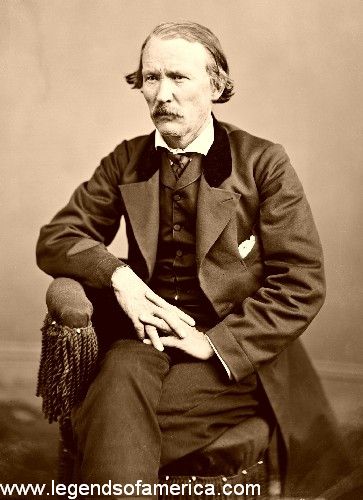
Kit Carson and John Fremont


In 1842, John C. Fremont, an enterprising adventurer with a wealthy father-in-law, decided to seek a way into California. He had no particular skills except the ability to draw a fairly good map and a military commission. He had never been to California but knew it was west...eventually. However, between him and the gold coast were insurmountable obstacles called the Rocky Mountains. Fremont's enterprise was imperiled before it had started because he had no idea how to get through those daunting, snow covered peaks. Then he met Kit Carson. The old fur trader was a veteran of those regions and knew of a pass through the mountains. He took the pilgrim Fremont under his wing and they went on to make three wildly successful journeys west.

I held this knowledge in my thoughts as I stared in wonderment at the little film my pilgrim financier had made. Two adjectives came to mind. The film was either disastrous or sincere, depending on how you were raised. My mother's voice whispered a selection and I planned my escape. I suggested that if this sincere film was what he had in mind to make, he didn't need me. I knew many a young student film maker that would love to take on this project, for a whole lot less. But this newcomer was a whole lot slipperier than he looked! He quickly barred my way to the door and assured me he wanted nothing but the best. As that was obviously me, we shook on it and I took the job. I started a studio, hired a crew and jumped into the enterprise with both feet. Now, most successful adventures are filled with hardships or they wouldn't be adventures. Carson and his group encountered frozen feet, starvation and outright war on their journeys. I encountered delays in funding, broken promises and decisions that came too late but I made thirteen successful journeys with this financier and an empire was built. Then he took on a wealthy partner and my services were no longer required.

Fremont's success with Carson put him on the path to military promotions and entry into politics as "the Great Pathfinder". But Fremont no longer had Carson and he bungled opportunity after promotion on his downhill slide to poverty struggling to live off his wife's waning fortune. Two years after I left a successful project, those thirteen successful episodes are all the legacy that remains of a crumbling empire on two coasts. It's not the money or the enthusiasm that makes the difference. It's the guide.

Tuesday, March 4, 2008

Who You Gonna Call?

No one gets off the stage in Los Angeles thinking they're unprepared. They've got what they believe to be a good idea and a bag full of money. And they've done research! They've asked a friend if they know anyone in Hollywood. The friend has a friend who went to school with a kid that does something in the film industry, maybe even cartoons. The guy with the idea talks to the guy who does something involving the cartoon industry and offers him a bag full of money attached to an offer he can't refuse. (I have this horrible idea that this is really the way films are made! ) This particular story has a happy ending, however. The guy they contact actually does do something in the cartoon industry; he does voices for cartoons. He also knows he's in over his head but figures he's a quick study. He calls a friend who does voice directing and the two of them conspire to do something smart; they call someone they know who they have worked for before, liked working with and can trust. They call the Mad Animation Prophet.

Now, interested readers, I have been here before. I have been contacted by people who claim to have money and a good idea. They usually have only part of a bad idea and no money. They want you to do all the work, pay you no money and, if they are really good, get you to cover the cost of artists to develop drawings they also never pay for. It comes to nothing except sadder and wiser artists. The first meeting started well. There was the career professionals I had worked with, a live action producer, with heavy-weight credits, representing the board of directors and the two creator/producers. The creators were excited because they had a good idea they just didn't know what to do with. The voice talent were excited too, probably over the creators', supposed, bag of money. The live action producer seemed confused. What did he know about animation?

The Mad Animation Prophet was skeptical. Yet I was hopeful because the room reeked of sincerity. The creators did have a good idea. They wanted to do good. They had an idea to start a national program teaching children and family safety funded by altruistic corporations who would use the program to advertise their own participation. The representatives of this program would be adorable cartoon animal characters who showed the kids at home how they can keep themselves and their family safe. The purpose of the project was to create these marketable characters and introduce them via a free animated film the investing corporations would finance. Best of all, they already had the money! Wow. Could this be true? This deal had everything: professionals I knew, a famous live-action producer I trusted, a project that that will actually help kids and two sincere creators with a bag of money! I was convinced. I agreed to make their film but what did they want exactly? Fortunately, the creators had already produced a short film that spotlighted their characters and the information they wanted to highlight. All I needed to do was make a more "commercial" version of the idea. Then they showed me the film. My blood turned to ice! It was like discovering a hostile tribe's presence at a water hole AFTER you've unpacked your mule.

Wednesday, February 27, 2008

Stage Stop Starlette


Every now and again, depending on the financial climate, some enterprising financier will step off the stage at the dusty town of El Pueblo De La Senora La Reina De Los Angeles looking to invest in the Animation Biz. Sometimes they have a personal vision driven by religious faith or a family story to tell. Sometimes they've read a positive article about "gold in them thar Hollywood Hills" and seek an exciting investment opportunity. They arrive with a satchel full of money and with little or no knowledge of where to go or who to go to, to implement their dream. I liken their experience to the little farm girl who runs away to Hollywood to become a movie star. The very first person she meets when she steps off that stage in downtown L.A. will dictate how the rest of her life will go.

So it is with the financier. Unless the moving picture business has been your business in general and animation an interest of yours in particular, you must be very careful whose hand leads you away from the stage stop. It truly is amazing how the cost of animation goes up in direct proportion to how much money you have in your satchel! Animation is still a "hand-drawn" product. Technology has added fancy tools and overseas artists have provided a deeper talent pool but there is no "magic formula" to making an animated film. It's just simple math. It always surprises me how complicated this seems to venture capitalists. If an artist takes X amount of time to do a drawing for Y amount of money per drawing and you need Z number of drawings to complete your movie, it should be simple enough to multiply Y by Z to see how much the picture will cost and X by Z to see how long it will take.

Yet, time and time again I see budgets squandered on items unrelated to the manufacture of the product being sold and schedules being wasted on uninformed or ill-informed changes. Soon, there is no money, no product and no prospects for either because simple math was complicated by "hidden costs" that were no fault of the "expert" hired to guide the way. As a result, the disillusioned investor hangs a "Busted!" sign on his "California or Bust" ambitions and turns his wagon around to where he came from. Once he spreads his sad story among his fellow capitalists, you can bet that no more money will be spent on Animation speculation for a long time. Such a pity and so unnecessary. Research, education and good old-fashioned "due diligence" could have placed him on the right trail with a proper guide. I met the stage once when a naive entrepreneur stepped off and I couldn't believe his good luck!